
Territories of Life, Ritualities, and Relational Ontologies between the Communal, the Natural, and the Spiritual The Kolla Kondorwaira Indigenous Community of Potrero de Castilla, Salta, Argentina
Article Sidebar
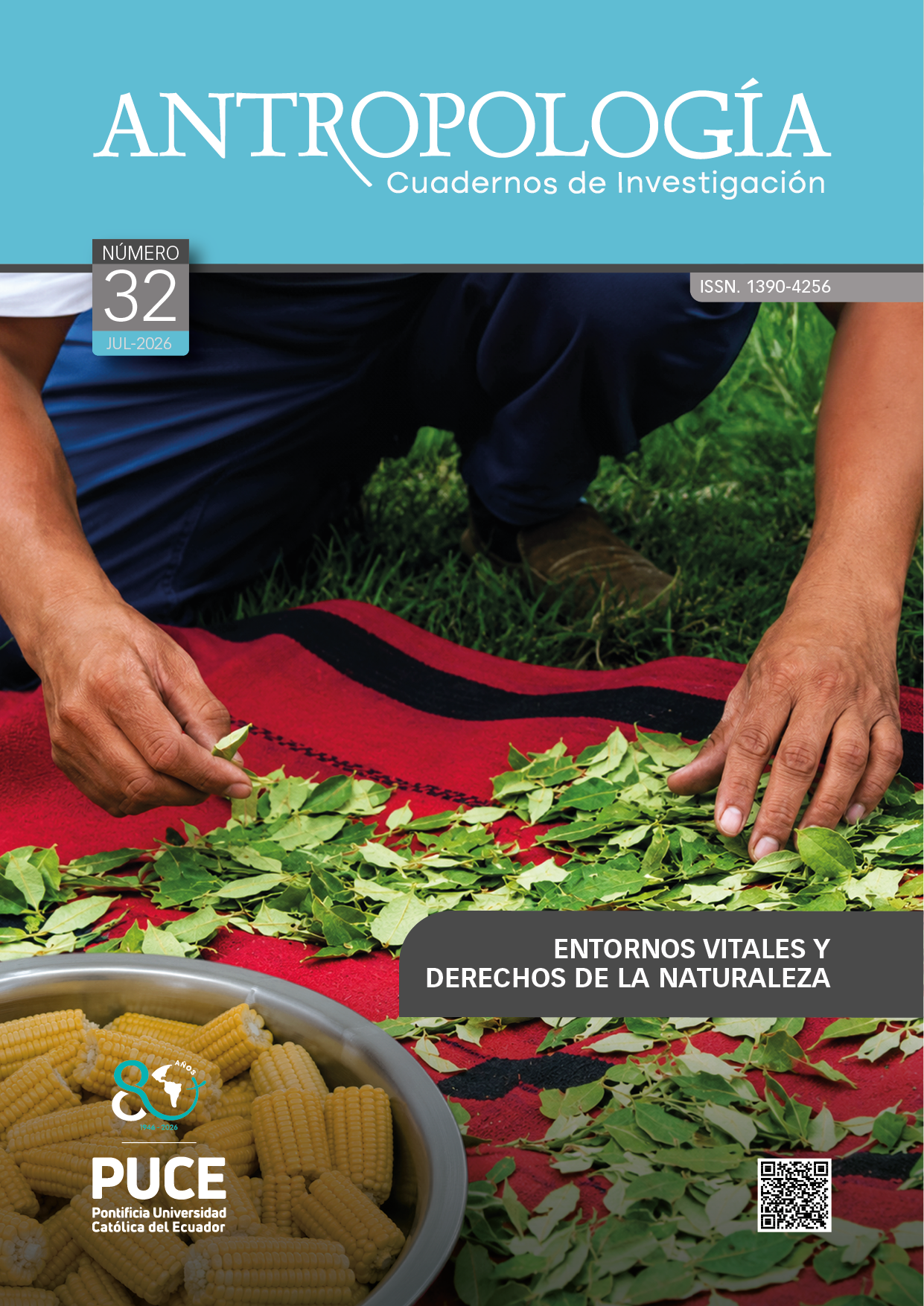
Main Article Content
Abstract
Based on the lived experiences and ways of feeling of Kolla Kondorwaira Indigenous Community of Potrero de Castilla, we explore the ritual practices and spiritual relationships that the families of this community maintain with nature. These expressions bear witness to the relational ontologies present in Argentine Northwest (NOA), through which various spaces inhabited by Indigenous communities are given meaning and appropriated as their territories of life. Based on doctoral research developed through a Participatory Actions Research (PAR) methodology and a dialogue of knowledge, we share four categories of ritual practices: (i) those linked to livestock activities (marcada, señalada, casamiento and corpachada); (ii) others performed during the agricultural season (Pachamama Day, preparation of sacred foods, and seed challada); (iii) several associated with the deceased (Day of Souls and farewell to loved ones); and (iv) the Virgen del Rosario pilgrimage. From this experience, we can observe that ritual practices are not only cultural or religious manifestations but also lived experience and feelings that allow the families of this community to make sense of and signify their territory from a relational ontological perspective. In this context, the Pachamama, animals, seeds, hills, springs and souls are not objects of the natural environment, instead, they are considered subjects who actively participate and are present in the development of community life. From this perspective, nature is not an external entity in the life experience of the Kondorwaira Community, but rather a part of daily life, present in the relations of reciprocity that communities like Kondorwaira have historically sustained.
Article Details
Antropología Cuadernos de Investigación opera bajo licencia Atribución-CompartirIgual 4.0 Internacional (CC BY-SA 4.0). Esta licencia permite copiar y redistribuir el material en cualquier medio y formato, adaptarlo, transformarlo y construir a partir del material para cualquier propósito (incluso comercial) siempre y cuando se atribuya la autoría de manera adecuada, es decir, dar el crédito apropiado de autoría, proveer un link para la licencia e indicar si se realizaron cambios del contenido. Se pueden consultar todos los detalles aquí
Los derechos de autoría son de propiedad exclusiva de los autores y autoras sin ninguna restricción de su propiedad intelectual. Los autores y autoras están en libertad de difundir su artículo en cualquier otro medio, repositorio institucional, en un libro o revista, siempre y cuando se anote que el artículo fue publicado por primera vez en la Revista Antropología Cuadernos de Investigación, número, año de publicación, sección y número de páginas. El artículo puede ser depositado en dichos repositorios en cualquiera de sus versiones, ya sea en la versión enviada, aceptada o publicada.